

TL;DR
The best way to learn Spanish is not through drills or memorization, but through understanding. Prioritize listening and reading, let speaking develop naturally, keep stress low, and connect Spanish to your personal interests. Ultimately, consistent, enjoyable exposure leads to real fluency.
For those who want to learn a language, but don’t know which one to choose, I often recommend Spanish. Spanish is a good default language for obvious reasons: it’s spoken by hundreds of millions of people across several different countries, and it’s relatively easy to learn. Of course, I recommend finding a more personal connection to the language, but the benefits of Spanish are objective. So, what’s the best way to learn Spanish?
Many aspire to learn Spanish, but fail due to a lack of motivation, discouragement, and the wrong priorities. This post will get you on the right track to learn Spanish successfully and achieve real fluency.
The Best Way to Learn Spanish Starts With Comprehension
Why Understanding Comes Before Speaking
When acquiring a language, comprehension precedes production. In other words, listening and reading skills develop prior to speaking and writing. Embrace this. As a language learner, reaching a deeper level of comprehension should be your first and principal goal.
Speaking improves naturally once you’ve built up your comprehension skills. It does not make sense to drill sentences, only to freeze in spontaneous conversation. Remember, communication is possible despite imperfect speaking. However, communication breaks down immediately when you stop understanding.
Immerse Yourself in Spanish Content
As a Spanish learner, you’re fortunate in that there is an abundance of material available. Dive into YouTube channels, Netflix series, novels, etc. Explore the Spanish-speaking world through listening and reading. You’ll not only fortify your comprehension skills, but also your cultural knowledge.
Use Beginner-Friendly Spanish Content
Not ready for native-level content? No problem. Start with beginner-friendly material and gradually augment the difficulty. I always recommend LingQ’s mini-stories. The mini-stories are a series of short texts packed with high-frequency vocabulary and sentence patterns. Each story comes with audio read by a native speaker.
The goal when working with beginner material is not to memorize every rule and new word that you encounter, but rather let the language wash over you. Absorb the patterns and flow of the language. Become an observant, curious learner. Memorization and grammar drills are not the secret ingredient for success in developing your comprehension skills.
How to Speak Spanish Naturally (Without Forcing It)
Speaking Comes From Input
Speaking is an outcome, not a starting point. As you read and listen to Spanish, you’re gaining a deeper understanding of the language. The goal is to speak intuitively, not recite what you’ve studied.
Accept Mistakes when Speaking Spanish
Do not expect to suddenly speak perfect, error-free Spanish. You will make mistakes. Embrace that speaking fluently entails a gradual process of trial-and-error. Expecting immediate conversational ability only results in discouragement.
Errors are a sign of progress. Don’t dissuade yourself from experimenting with the language. Make mistakes, receive feedback, and try again. Communication matters more than correctness.
Learn Spanish Patterns, Not Grammar Rules
Spoken Spanish doesn’t always follow textbook explanations. Written Spanish and spoken Spanish aren’t always aligned. Don’t let this stump you.
To sound natural, stay attuned to speech patterns. A surprisingly large amount of spoken language consists of certain phrases and expressions. This type of knowledge can only be acquired through extensive listening, reading, and conversation practice.
Why Stress Slows Down Spanish Learning
Language learning should not be stressful. It takes a long time to learn a language, and you’ll need to keep motivation as high as possible. Simply put, if you associate learning Spanish with stress, your motivation to learn will lower (or vanish altogether).
Speak Without Stress
When you’re speaking Spanish, lower your affective filter as much as possible. Let the language flow, and accept mistakes as they come. Unreasonable expectations and concern for external factors (evaluations, how others perceive your level, etc.) will hinder your speech and clarity of thought.
Spanish Grammar Makes Sense After Exposure
Spanish is an easier language, especially for English speakers. However, like any language, Spanish has its challenges. Verb conjugations, the subjunctive, and grammatical subtleties (such as the difference between ser and estar) can seem like real barriers to success.
However, trust that you will internalize these concepts over time. Grammar explanations are fine. But it’s best to use them as a reference and continue to develop your own feel for how the language works.
The Best Way to Learn Spanish Is to Follow Your Interests
Find Your Personal Reason for Learning Spanish
Why do you want to learn Spanish? Sure, it’s a useful language. But what’s your personal reason for learning Spanish? A clear connection to the language solidifies commitment and consistency. Are you learning Spanish to travel? Are you curious about the culture? Do you know someone who speaks Spanish?
Successful language learners align their target language with their personal interests.
Learn Spanish Through Content You Enjoy
Combine learning Spanish with your personal interests. Keep yourself engaged through podcasts, books, interesting conversations, etc. Ideally, you’re listening and reading to Spanish everyday not just to learn Spanish, but also to seek personal enrichment and fulfillment.
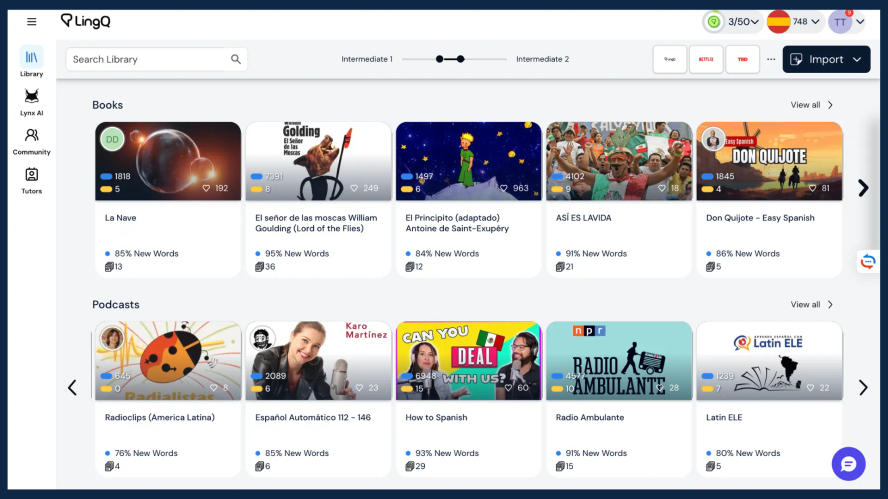
Turn Real Spanish Content Into Learning Material With LingQ
As you pursue your interests through Spanish content, push yourself to gradually increase the difficulty. However, listening and reading to content that you enjoy doesn’t have to feel difficult. Tools like LingQ remove a lot of the friction that comes with reading and listening in another language.

Import content that matters to you. Transform your favourite content into custom Spanish lessons. LingQ takes care of the mechanical needs—one-click translation, progress tracking, text-to-speech–and you get to focus on enjoying the content.
Conclusion
Spanish is a global, practical, and beautiful language. To achieve fluency in Spanish, prioritize comprehension, keep your expectations reasonable, and find a personal connection with the language. Those who consistently immerse themselves in Spanish, embrace mistakes in speaking, and combine language learning with personal enrichment inevitably achieve success.
FAQs
What is the best way to learn Spanish for beginners?
Start by building comprehension through listening and reading. Find material that’s appropriate for your level, and gradually augment the difficulty. Don’t worry too much about speaking at this stage.
Should I focus on speaking Spanish from day one?
No. Speaking becomes more important once you achieve an intermediate level in the language and can handle longer, more meaningful conversations.
Do I need to master Spanish grammar to become fluent?
No. Grammar helps explain patterns, but real fluency comes from repeated exposure to the language and a personal sense of intuition for how the language works.
Is it normal to make lots of mistakes when speaking Spanish?
Yes, and it’s unavoidable. Mistakes are a sign that you’re experimenting with the language and moving forward. Embrace them!
How can I stay motivated when learning Spanish long-term?
Tie Spanish to things you genuinely enjoy—content, culture, people, or goals. Discipline is important, but interest sustains motivation.


comments on “The Best Way to Learn Spanish (And Actually Become Fluent)”