

TL;DR
Language learning success comes from spending enough time with the language and connecting it to your interests. Notice patterns, prioritize vocabulary over grammar, and stay patient. With the right tools and independence, you’re sure to achieve fluency over time. The key to make the process the reward.
____________________________________
How do you actually learn a language? As someone who’s learned 20 languages, I have some insight on how to learn a language successfully. Anyone can learn a language with the right approach. Here are seven “secrets” to set you up for success.
1. Spend enough time with the language

How much time should you spend studying per day? Well, the more time you spend with the language, the faster you’ll progress. When I study a language, I spend at least an hour a day listening to and reading the language—and I know that I’ll reach a good level within several months to a year.
To reiterate, “spending time with the language” refers to listening to and reading the target language, not classroom hours. The classroom can be a good place to meet other people with similar goals, but you’re not always fully immersed in a classroom setting. A lot of your language learning will take place outside of the classroom.
2. Connect the language to your interests
Successful language learners enjoy the process. Use the language to explore content that genuinely interests you. For example, I’m really interested in history. Through language learning, I can listen to and read texts about topics that engage me.
Listening and reading in another language isn’t always easy, so you might as well enjoy the content. If you like the material in your target language, you’ll continue to immerse yourself on a daily basis. As a friend once said, “In language learning there is no finish line. If we do what we like to do, it’s the process itself that is the reward”.
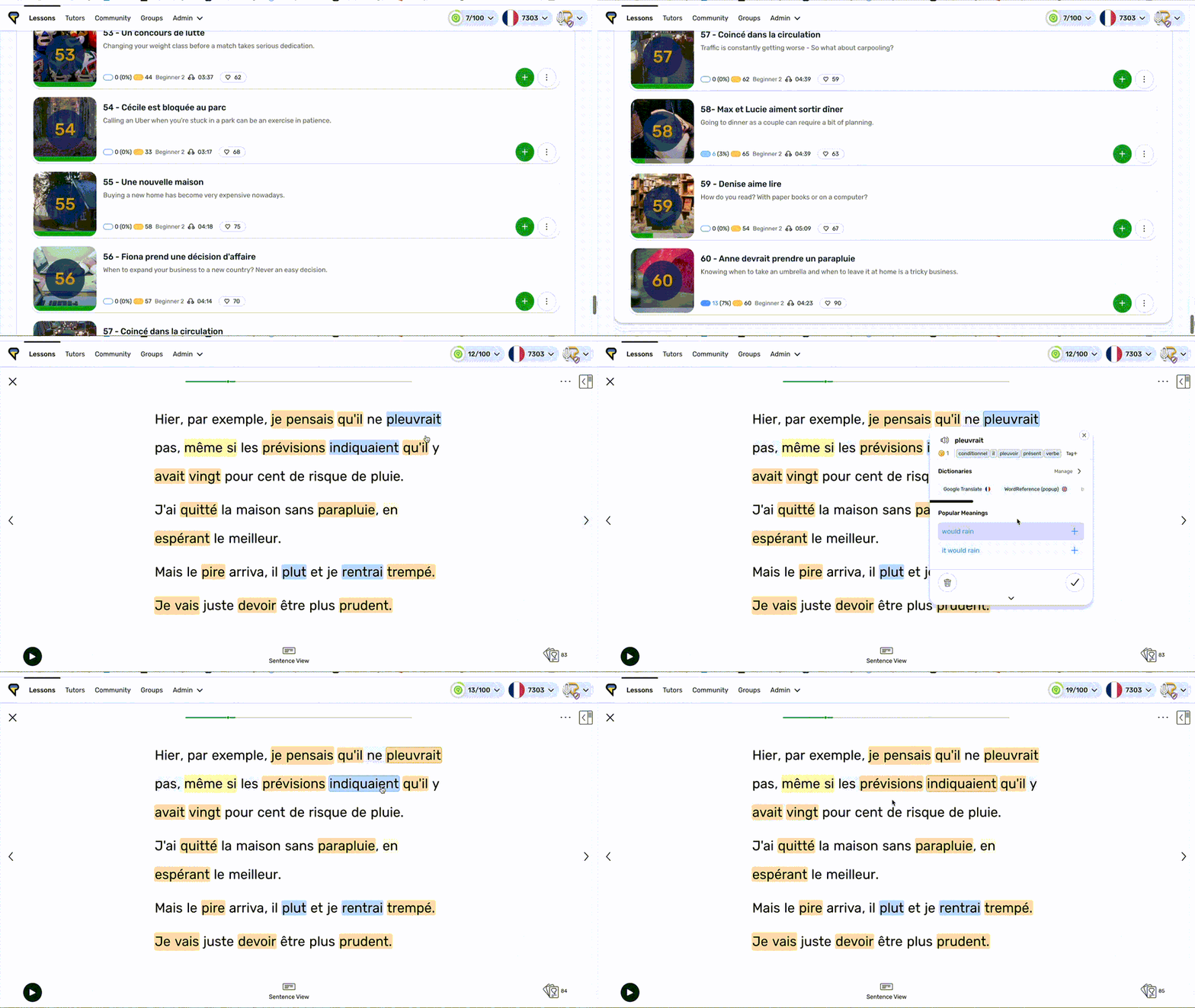
When I start out with a language, I opt for the Mini-Stories at LingQ. The material is appropriate for novice learners, and it offers a wide topical variety. The stories are filled with high-frequency vocabulary and key sentence structures, preparing me for more intermediate-level content.
3. Learn to notice patterns
The ability to notice is probably the most significant difference between those who achieve language learning success and those who do not. The goal is not to memorize every rule about the language, but to notice patterns.
- Which words are used in which contexts?
- What patterns can you see in phrasing and sentence structure?
- What do you notice about a language’s cadence and intonation?
To accomplish this, you need sufficient exposure to the language—primarily through listening and reading. It’s a matter of staying observant. If I’m reading, I’ll often underline certain expressions or words. If I’m reading online I will save words and phrases to my personal database. Just the act of saving them helps me to notice.

The Role of Grammar and Corrections
I don’t force myself to memorize grammar explanations, and I don’t stress about every mistake I make in the target language. However, grammar guides and feedback can help us notice new traits about the language. Awareness of a grammar concept or a recent correction in our writing can help us be more observant when reading or listening. We see the grammar concept applied and notice smoother ways to express ideas.
Noticing Pronunciation
The importance of noticing extends to pronunciation. You can’t pronounce what you can’t hear, so you have to pay attention to how the language is pronounced. It’s not just the individual sounds you need to pay attention to, it’s the intonation as well.
4. Prioritize Words Over Grammar

Vocabulary is much more important than grammar. To become a successful communicator, you’ll need to build up an extensive passive vocabulary. The grammar will eventually fall into place. Again, consult a grammar guide as you please. The top priority, however, should be accumulating words.
I’m not suggesting that you memorize lists and lists of vocabulary. I acquire words through listening and reading on LingQ. If I don’t understand a word, I’ll click on it. I click on words multiple times before the meaning actually starts to stick. Through this method, I not only understand the meaning of the word, but its use. I’ve seen the word multiple times in multiple different contexts.

Repetition Matters
Coming across words again and again in different contexts is what makes them truly stick. Novice learners can ensure that this happens through re-reading and beginner-friendly material. More intermediate and advanced learners can focus their reading and listening on a particular topic: professional development, military history, cooking, etc. You’re guaranteeing that you’ll encounter the same vocabulary across different content.
5. Be patient
Language learning is not a linear progression. You will forget words. As you increase the difficulty of your content, you’re more aware of what you don’t know. Speaking is rusty. In short, there’s a lot of hurdles.
The brain is constantly learning, but language learning is a gradual process. You have to accept that it’s not going to happen overnight. In fact, it may take months for certain concepts to sink in. Language learning success requires trust in the process.
Soon enough, you will be able to express your ideas without issue. You’ll revisit difficult texts and find that you understand them more clearly. A grammar concept suddenly made sense after hearing it in a conversation. Don’t hinder yourself with negativity. Realize that it’s a long road, but make the journey enjoyable and trust that it leads to fluency in that language.
6. Get the Right Tools
Language learning is a long process, but it doesn’t have to be difficult. Smoothen out the process with the best resources for language learners.

Find Good Content
There’s so much content out there. For novice learners, I recommend investing in starter materials. LibriVox and LingQ’s mini stories are my default choices. I like materials that emphasize dialogue and guarantee exposure to common language, natural phrasing, and easy repetition.
Intermediate and advanced learners should dive into content specific to their interests. There is an abundance of learning material on the Internet that you can integrate with your learning. Tools like LingQ’s browser extension, for example, enable you to create custom lessons with your favourite articles, podcasts, YouTube videos, books, and Netflix series ( available for Chrome, Safari, and Firefox).
Make Reading and Listening Easier
When immersing yourself in the target language, you want to achieve a state of flow. This is hard to do if you’re constantly stopping to look up a word, figure out who it’s pronounced, or creating lists of things to look up later.
Use tools like LingQ for instant translation, speech-to-text, and progress tracking. Don’t worry about the mechanics, and just focus on enjoying the content.
7. Become an independent language learner
Take charge of your own language learning. Successful language learners are independent. We all know that signing up for a language course, attending the lessons, and completing the assignments doesn’t guarantee fluency. Success comes to those who seize the language to pursue topics of interest, to those who constantly, actively seek the opportunity to immerse themselves in the target language.
An independent learner seeks clarifications, tinkers with their methods, and shows great patience. I don’t expect a teacher to walk me through the language. I don’t expect a teacher to make the language interesting for me. I find my own motivation to learn.
It has never been easier to be an independent learner. In a way we have more choices than ever and this can make things a little more complicated. On the other hand the opportunities are limitless. One of our goals at LingQ is to make it easier for people to navigate the full range of opportunities that exist to help make language learning easier, more effective and therefore more pleasant than ever.
Conclusion
Successful language learning is not about shortcuts or perfect methods, but about consistent exposure, curiosity, and independence. Spend time with the language, focus on understanding, build vocabulary through real content, and trust the process. If you do that, fluency becomes a natural outcome rather than a distant goal.
____________________________________
FAQs
How much time should I spend learning a language each day?
I recommend spending at least an hour per day reading or listening to the target language. Just understand that the rate of progress increases with the amount of time you put in.
Should I focus more on grammar or vocabulary?
Vocabulary matters more. You can communicate despite wonky grammar. It’s much more difficult to circumvent a lack of vocabulary.
Why is noticing patterns so important?
Fluency comes from recognizing how the language actually works in real usage, not from memorizing rules. Furthermore, it’s a reflection of curiosity for the language.
Is it normal to feel stuck or forget things?
Yes. A common term for language learners is “the intermediate plateau”. Language learning is a long process, and it comes with obstacles. Success requires patience.
Do I really need special tools to learn a language?
Not necessarily, but why not lighten the burden? Good tools reduce friction and help you stay in flow, making it easier to read and listen to more challenging (and interesting) content.
Want to learn language from content you love?


10 comments on “The Seven Secrets to Language Learning Success”
Comments are closed.
Thanks for your very useful informations.
Very good article, Steve. I really liked it because, it’s great to step out of the depths of language study and think about what we are doing from the outside looking in.
Very interesting, thank you Steve.
Hi l from Sudan My native language is Arabic, learn English at school, start to learn Türkiş first go to instidud, for 2years then try to watch Turkish program at Tv but till now Lam not floant’ hope to help me
Thanks
Hi Steve! Thank you a lot for your post. My own experience can sustain all you posted there. I had been studying English 40 years before came to conclusion that I was going wrong way. After these years my only result was the skill to read special professional content with the dictionary. But you know English is needed for successful carer. I gave a try to the new approach. And at first I decided to forget all traditional methods. I set up relaxation and pleasure befor all others.
The easier the best became my motto. Once I had learned about Steven Krashen and found his discovery very important. And once I had been observing your knconversation with Mr. Krashen. In the end of March I will have been studying iexactly one year in Lingq site. I suppose that this simple method of content learning gives astonish wonderful results.
Thank you very much for your kind comments and best wishes in your language learning adventures.
было бы лучше статьи, советы давали на русском, ведь я изучаю английский и тексты на английском пока еще не понимаю
Мади, хотя текст на анг полностью не понимаешь, постарайся извлечь общий смысл из контекста.
Steve, thank you enormously for sharing employable techniques regarding a language learning. Of course, a fundamental requirement is spending as much time as possibly every day enjoying the process itself as it is described as a reward being patient. Besides, you mention about the vitality of noticing along with putting an emphasis on vocabulary rather than grammar. Futhermore, to carry out the learning process efficiently proper tools are needed, and eventualy a language learner should be an indepent in their endeavors… I really appreciate you for applicable tools…
Hello Steve,
You made some really interesting points there about this whole idea of learning a language by combining it with the things you like. I find a lot of people are put off learning languages because they feel it involves sitting down with books and memorising. This article really provides modern outlook on language learning – previously, it was all about not speaking until you are fluent enough. I’m glad you’re acting as an ambassador for language learning. We need more people like you to persuade others to becoming linguists. Will be linking you in my blog, for sure.